EXHIBITION
Belarus Shtetl
For centuries, Belarus was home to a network of Jewish shtetls (an Yiddish word) — small towns where Jews made up the majority of the population. Shtetls were a distinctive feature of Eastern Europe before the Holocaust, thriving as vibrant centers of economic, spiritual, and communal life. Inhabitants primarily spoke Yiddish, yet shtetls also served as important places of interaction with non-Jews. The shtetl represented a unique cultural and historical blend of different ethnic groups, religions, and languages.
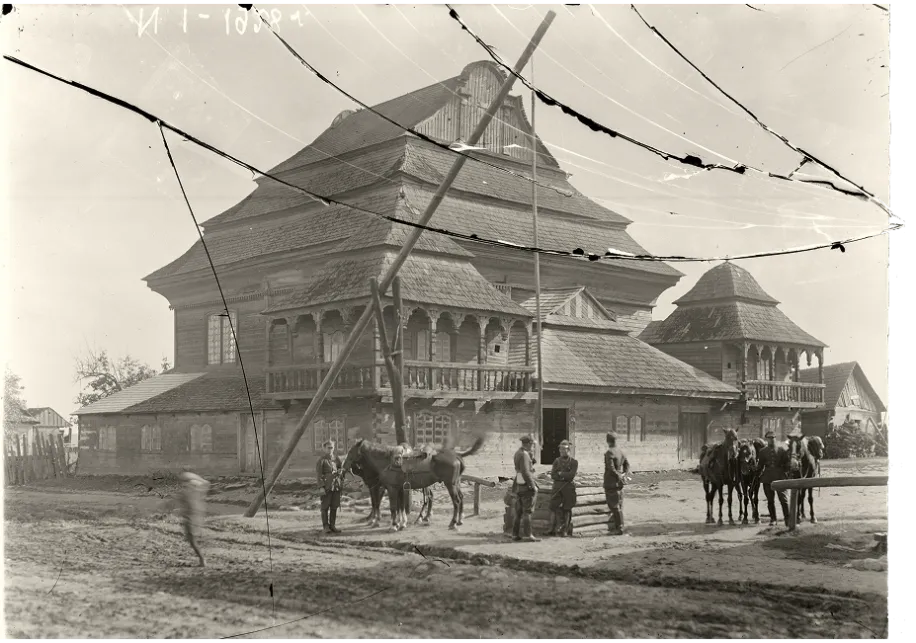
Wolpa synagogue
Institute of Art, Polish Academy of Science
At the heart of every shtetl stood the synagogue, a place where the spiritual, cultural, and social life of the Jewish community intertwined. The Belarus Shtetl exhibition shines a spotlight on this rich history, offering an immersive exploration of four significant synagogues, each meticulously reconstructed in virtual reality by combining archival research, classical restoration techniques, and modern digital technologies. These synagogues reflect different architectural styles, periods, and geo-cultural influences, showcasing the diversity of Belarusian shtetls.
The exhibition features the Great Synagogue of Wolpa, which was destroyed, and the Great Synagogues of Bykhaw, Slonim, and Ashmyany—still standing today, though empty and abandoned.
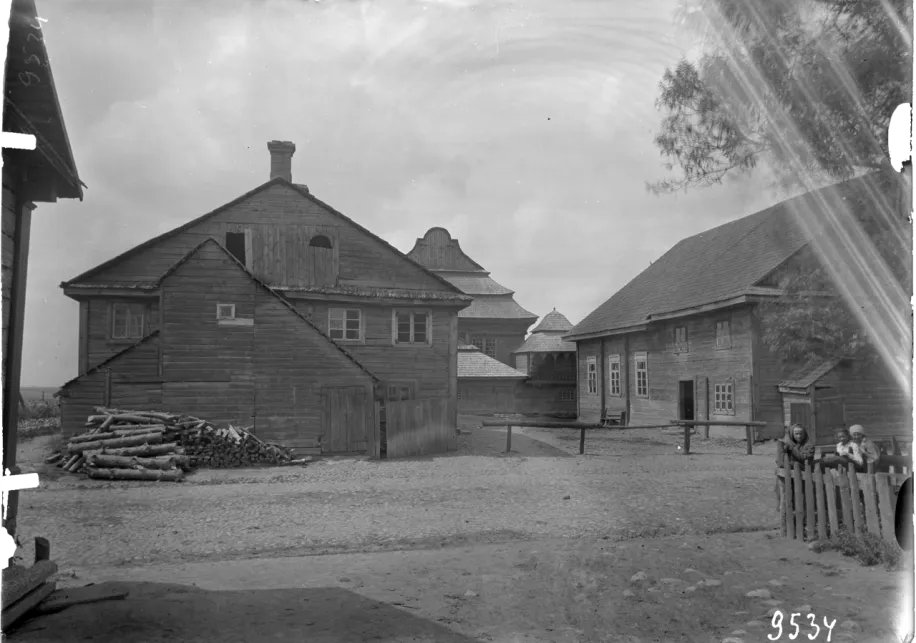
Wolpa, 1939
Institute of Art, Polish Academy of Science
OBJECT
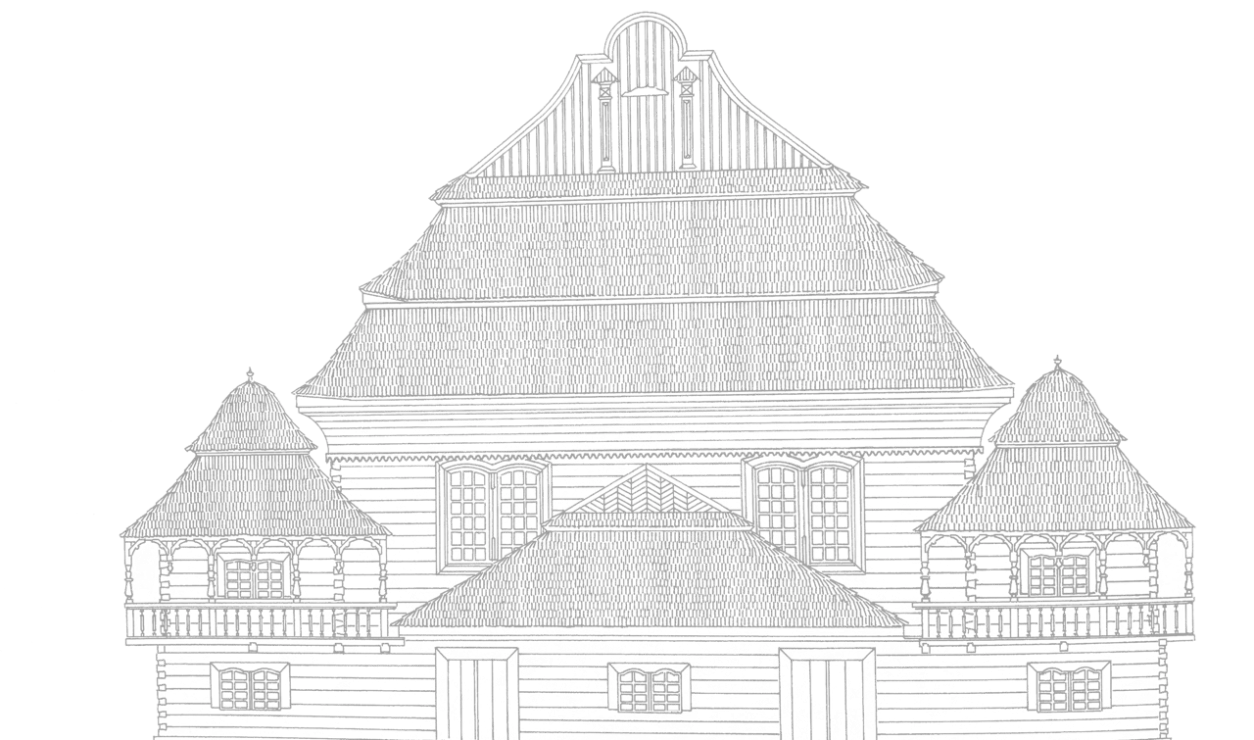
THE Wolpa Great Synagogue
The Wolpa Great Synagogue is considered one of the most beautiful wooden synagogues ever built. Constructed in the first half of the 18th century in the town of Wolpa, it was a vibrant center of Jewish communal and spiritual life. Tragically, it was completely destroyed by the Nazis during World War II.